From Fukuoka, our little band visited Nagasaki, where on August 9th, 1945 the second of two atomic bombs was dropped on Japan in WWII.
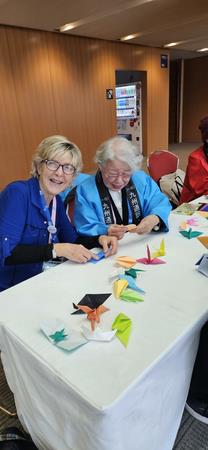
Kathleen learning how to fold paper cranes to be presented at the peace ceremony in Nagasaki.
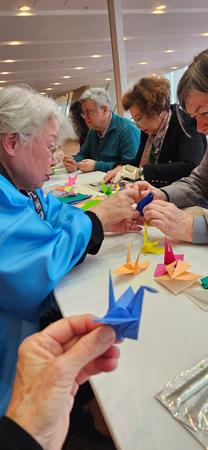
Other conference attendees learning how to fold paper cranes for presentation in Nagasaki.
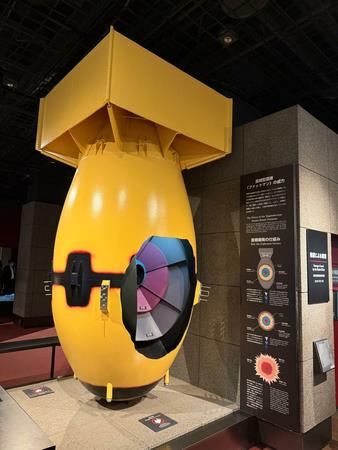
A mock-up of the the atomic bomb, FAT MAN, dropped on Nagasaki. LITTLE BOY had been dropped on Hiroshima on August 6th.
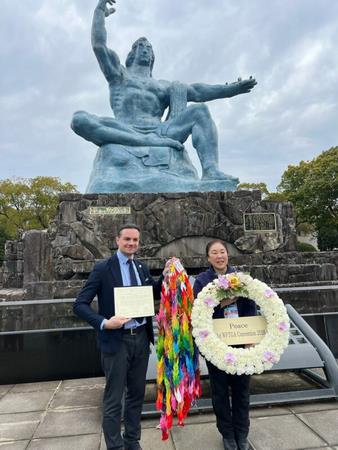
1,000 Paper Cranes and Joint Peace Declaration Frame a Powerful Call for Truth, Context and Professional Integrity
Nagasaki, Japan – 2026
During the WFTGA Conference 2026 in Japan, tourist guides from across the globe gathered in Nagasaki for a Peace Ceremony that became one of the most meaningful moments of the entire conference.
Throughout the conference, participants folded 1,000 paper cranes, a Japanese symbol of peace and hope. The cranes were formally presented during the ceremony together with the host organisation K-ITG. The act symbolised international solidarity and a shared commitment to dialogue and remembrance.
The ceremony concluded with the joint signing of a Peace Declaration together with the Mayor of Nagasaki, affirming universal human rights, human dignity and the responsibility to ensure that history is conveyed with sensitivity and integrity.
At the heart of the ceremony stood the address by WFTGA President Sebastian Frankenberger, which many participants described as the emotional and intellectual highlight of the conference.
In his speech, the President emphasised that catastrophic moments in history are never isolated events, but the result of years marked by eroding trust, failing communication and missed opportunities for dialogue. He reminded the tourist guides that remembrance alone is not sufficient. Responsibility must follow memory.
Focusing on the professional role of tourist guides, he stated:
“We explain. We connect. We give context. And in doing so, we shape perception. That is influence. And influence is responsibility.”
He underlined that guides are not merely transmitters of information, but interpreters of history and culture who help audiences understand complexity, contradiction and context. In a time shaped by selective narratives, social media bubbles and deliberate misinformation, the ability to distinguish perspective from fact becomes essential.
Sebastian Frankenberger challenged the profession with a central question: "How do we recognise truth? Where do we look for it, and how do we remain open in a fragmented digital world?"
He called upon guides worldwide to encourage critical thinking, respectful dialogue and the courage to speak truthfully and carefully, especially when history is distorted or suffering is minimised. He stressed that professional impartiality does not mean moral indifference.
As eyewitnesses of the darkest chapters of history become fewer, he reminded participants that the responsibility of remembrance increasingly rests with those who did not witness events themselves, but who must ensure that humanity remains at the centre of the story.
For many participants, this reflection on ethical responsibility deeply resonated. Numerous participants described the speech as profoundly moving, reaffirming their understanding of guiding as a profession grounded in integrity, cultural sensitivity and a commitment to truth.
From Nagasaki, tourist guides departed not only with emotion, but with renewed commitment to uphold the highest standards of professional guiding and to act as responsible ambassadors of dialogue and peace within their communities.
Access the Full Address
The complete speech by WFTGA President Sebastian Frankenberger is available:
• Watch the full video
• Read the complete transcript
• Download the speech as a PDF for further distribution
We encourage all members and partners to share the address within their networks. The ethical responsibility of tourist guides and the societal impact of our profession deserve greater recognition worldwide.
Greg